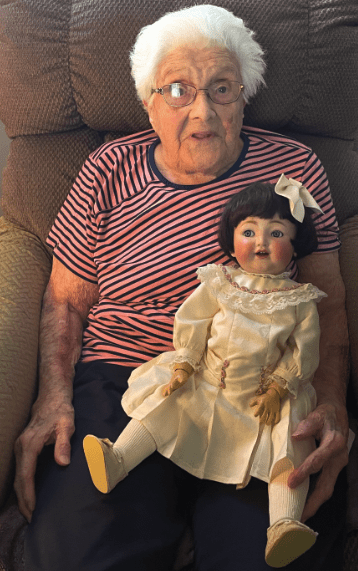
On August 15th, Liesel Henson celebrated her 100th birthday. Born in Frankfurt, Germany in 1925, she immigrated to the U.S. 27 years later after marrying an American soldier. His career span took her throughout the States and on many adventures, ones that Liesel said she never feared at the time.
“I didn’t have any sense. I don’t think I was a bit scared,” she said. “I really wasn’t scared of anything.”
She said this of cross-ocean voyages, driving her kids across the U.S. days after receiving a driver’s license, and of leaving her home – and family – behind.
Her personality had become hardened early in life through poverty, war, and losing her father at 16. After entering Germany’s mandatory conscription, August Speiser never came home. The former streetcar conductor left behind his wife and child in 1941.
This came two years after Liesel’s first hit from the war: she was sent home early from a boarding school program when WWII began in 1939. Recognized for her academic ability, Liesel was sent to Die Burg Nimmersath (the Castle Nimmersath) for a year-long program.
“I didn’t want to go,” Liesel said, who was 14 at the time. “I was crying and thought I would be homesick, but I wasn’t.”
However, it felt less significant at the time, she said.
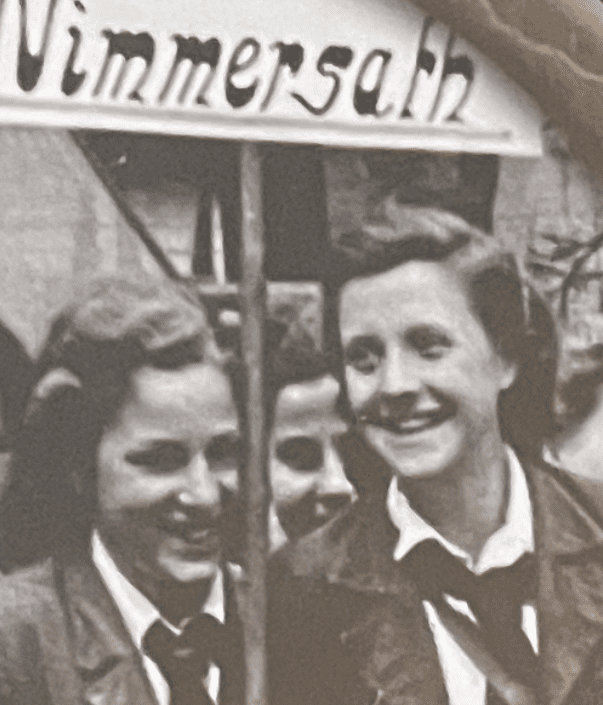
“She had a lot of good times before the war,” said Pat Liby, Liesel’s daughter. “She was really close with her two cousins, and they had a lot of escapades together.”
Liesel spoke of a large, shared garden where she grew cherry trees and raspberries. And swimming in the river – not the pool – because the river was free.
“You never had any money so we went where it didn’t cost,” she said. “It was a fun time.”
At 11, an aunt and uncle took her to see the LZ 129 Hindenburg, which was moored in Frankfurt before its 17th and fatal transatlantic flight. Liesel remembered the passenger airship being so big that it took up the entire building.
“Oh yes I can see it clear as a picture,” she said. “It was huge. Of course you could just stand at the door and look at it in this big hall. My goodness it was big.”
Though she can easily recall details, she often questions their significance.
“Why does it matter? My life isn’t any more important than anyone else’s.”
However, to her family, the past is not just a family treasure, it’s a look at where they all originated.
“I didn’t know how much I liked history until I got older and started listening to her history,” said Pat. “I guess as kids you’re just selfish and worrying about yourself. We didn’t ever ask her questions when we were younger.”
In 1947, Liesel married an American soldier. Though German, it brought no animosity to the family. Winiford Franklin Henson – Frank – worked with the Army’s mail system.
“He was quite popular with my family because he brought all kinds of things and there were rations at the time,” she said. “Lotions, chocolate for the kids. He was really a good person, and my family just loved him. They liked him better than I did, I think. Nothing against him, but that’s just the truth.”

Six years later, in 1953, Frank received orders to Fort Lewis, Washington. Liesel sailed to New York City with her son Mike, 3, after Frank had relocated.
“Of course, I missed some things but I got used to them pretty quick. People are so good and nice, and everything works out.”
She and Mike then boarded a plane – her first – to cross the U.S. While Mike was asleep, she left him on the plane, asking the stewardess to make sure he didn’t wake and wander off.
“I got little boxes of milk. I had to have somebody show me how to open the box. It was all new to me; I’d never seen it before.”
The family spent a stint in Washington, where Pat was born, before going to Honolulu, HI. Again, Frank departed before his family, leaving Liesel to cross an ocean on her own.
Knowing she would need a driver’s license, she found a Missouri DMV before the trip.
“The man giving my test said, ‘How did you get here?’ I said, ‘I drove how else am I supposed to get here?’”
Then with license in-tow, she loaded up the kids (then 7 and 2) and headed west.
“When I told my brother-in-law I was driving to San Francisco, he looked at his wife and said ‘You might as well prepare for their funeral. You’re sending them off to their death,’” Liesel said. “But I had a map and knew I needed to go west so we went west.”

Next, it was time for Frank’s final duty station at Fort Riley where they moved in 1960. The family moved to Wakefield three years later when Frank was discharged.
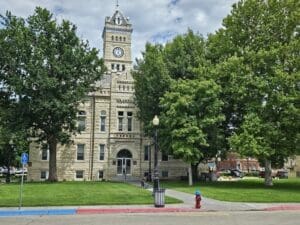
“I had no idea where I was going; somehow I stopped at Wakefield and asked if they knew anyone who rents places,” Liesel said. They lived in a rented house that sat in two places – before and after the Milford Reservoir, before Frank purchased a house in 1970.
“I didn’t know anything about it, he just did went and bought it but it was just fine with me, I liked the place,” she said.
However, Frank passed away in 1973 after a car wreck. He was 49 years old and a veteran of WWII, Korea, and Vietnam.
To keep herself busy, Liesel began work as a school cook; she was hired for Wakefield School’s brand-new kitchen and stayed for 27 years.
“I really liked my job, I think about it still sometimes; we worked awfully hard, especially on delivery days,” she said. “We’d have cases piled up to the ceiling. It was a big, hard job but I loved it. I cooked anything that was on the menu; I always made much more than I was supposed to so I could give seconds,” she said.
Then there was the big trash barrel that seemed to collect retainers.
“They had to take the whole barrel out and dump it,” she said. “’Oh I lost my retainer, my Mom is going to kill me’ I heard that a million times. I don’t think they ever lost them completely. I think they always found them. Oh, what a time we had. I really enjoyed working there. I had many good years.”
She lived in the same house for 46 years, including two years when her own Mother, who never learned English, came to live with her. Then in 2016, Liesel moved in with Pat and her spouse, Mike, where she resides today.
“I had quite a life,” Liesel said. “Sometimes I think, ‘How in the world did I do it? How did I make it through there?’ It’s amazing to me but I didn’t have a choice and I just did it.”
Top: Liesel Henson, 100, poses with Erika (ee·ri·kaa) the doll she received as a Christmas present at 5 years old. Though the eyes no longer close, Liesel said it was a big deal to receive a doll with moving eyes and joints.
“The minute I got it I said ‘We have to see my aunt, uncle, and cousins. I had to show it off because I didn’t have brothers or sisters to show things to.” Her Mother was worried about the icy weather while her Father said yes and took them to a relative’s home.
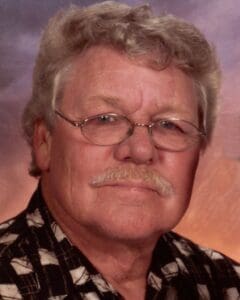
Top Liesel’s father, August Speiser, was drafted to the German army and went MIA in 1941 when she was 16. (right) Her husband, Winiford Franklin “Frank” Henson, served in the US Army from 1943 until 1963, through WWII, Korea, and Vietnam. Liesel and Henson were married in 1947 in two ceremonies, one in the German Church and another by an Army chaplain.
Middle: Liesel (right) and cousin, Ernestine “Erni” (ay-nee) attended Die Burg Nimmersath (the Castle Nimmersath) with her in 1939. Erni will turn 100 this November.
Bottom: Liesel with her oldest child, Mike, just before they left Germany for the U.S. in 1953.