By Jennifer Theurer
Marysville, Kansas, is home to one of the most prolific populations of black squirrels in the nation and the circumstance of their arrival is a matter of fact for Wayne Kruse, executive director of OneMarysville.
Kruse says those who fought on the Union side of the Civil War held a reunion in 1912 in what is now Marysville City Park. Reunion organizers hired the local McMahon Carnival that featured rides, a hot air balloon, and exotic animals.
It was the exotic animals that drew the attention of an attendee who set events in motion to make history.
“The entertainment that day was also provided by the Marysville Cornet Band,” Kruse said. “So as the band was playing, the youngest band member noticed that his son was messing with the cage of black squirrels, opened the cage, and the black squirrels escaped and have been here ever since.”
Some may try to cast doubt on the black squirrels’ arrival, but Marysville citizens know the truth.
“That’s a true story that’s been passed down from generation to generation,” Kruse said. “So we know that is how our black squirrels got here and have stayed here.”
Sixty years later in August 1972, the Marysville City Council took formal action to adopt the black squirrel as the city’s mascot. Every year around nut gathering time, which is mostly towards the end of October, the town hosts a celebration.
“[The celebration] has changed names. It’s been called Black Squirrel Day, Black Squirrel Night, Black Squirrel Fest, Black Squirrel Fall Fest,” Kruse said. “But no matter the name, they all celebrate our beloved black squirrel.”
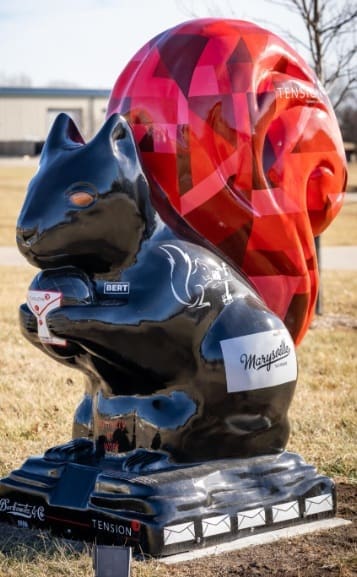
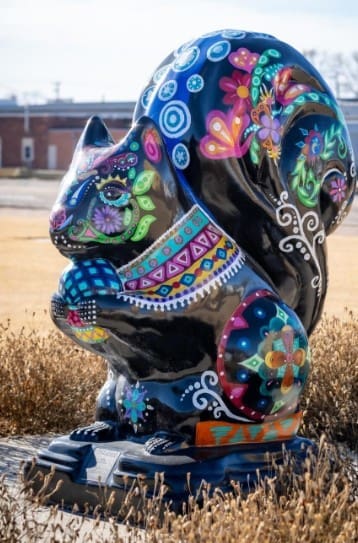
In 2016, Marysville decided to let people know about the black squirrels’ importance year-round with the Squirrels on Parade art installation. It currently includes 51 5-foot-tall black squirrels painted in a variety of themes decorating the sidewalks and streets of Marysville.
“All 51 statues are owned either by a business or individuals or an organization,” Kruse said. “So when you buy a black squirrel statue, you are responsible for the care and upkeep.”
The community takes tremendous pride in the artwork and offers visitors a map so they can easily find each one.