By Ron Wilson, director of the Huck Boyd National Institute for Rural Development at Kansas State University
“He transformed what America eats.”
That’s a significant accomplishment that one author ascribes to a man who came from rural Kansas and traveled the globe a century ago, bringing new foods to American diets.
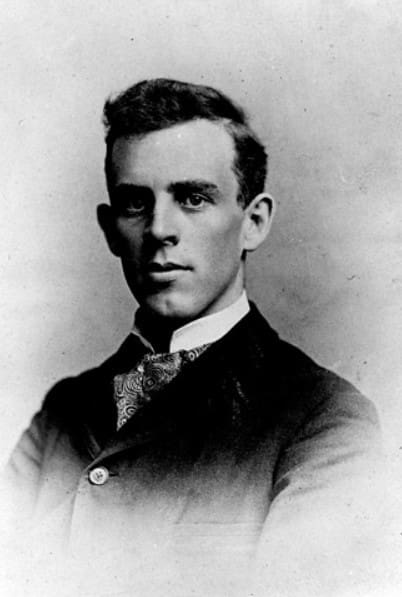
David Fairchild is the world explorer who brought these exotic products to America. His story was chronicled in a best-selling book by author Daniel Stone. The 2018 book, which is the primary source for this profile, is titled The Food Explorer – The True Adventures of the Globe-Trotting Botanist Who Transformed What America Eats.
Fairchild was born in 1869 in Lansing, Michigan, where his father George Fairchild was a professor and administrator at Michigan State. Ten years later, his father was appointed the third president of what is now Kansas State University, and is the namesake of K-State’s Fairchild Hall.
The family moved to Manhattan, where David Fairchild grew up. According to the 1880 Census, Manhattan was a rural community with a population of 1,441 people. Now, that’s rural.
Young Fairchild enjoyed the fields and orchards of Kansas. One year, his father hosted British naturalist Alfred Russel Wallace at Kansas State. Wallace came to the Fairchild’s home and told stories of his travels studying species in faraway lands. Young David Fairchild was captivated.
David later earned bachelors and masters degrees from K-State and went on to study botany at Iowa State and Rutgers. He was then employed as a junior scientist in the Division of Plant Pathology at the U.S. Department of Agriculture in Washington DC. In total, the entire roster of USDA employees consisted of 80 men at the time. (It is nearly 100,000 people today.)
Fairchild was researching plant diseases, but his childhood memory of the exciting stories about international travel remained with him. He received a Smithsonian grant to facilitate scientific exchanges with universities in Europe.
While on a steamship to Europe in 1893, Fairchild met Barbour Lathrop, a young millionaire and world traveler from California. Fairchild was fascinated by Lathrop’s accounts of his visits to exotic locales. Fairchild expressed a desire to visit these foreign lands and acquire new crops. To Fairchild’s surprise, Lathrop would later agree to finance future trips for him.
At the time, American foods were more about subsistence than variety. Fairchild worked to identify new plants and products to enhance American’s diets.
With support from Lathrop and USDA, Fairchild spent much of his ensuing career as a globe-trotting food explorer. For many years, Fairchild directed the USDA Office of Seed and Plant Introduction.
Fairchild visited more than 50 countries and brought multiple new products to the U.S. In the course of his foreign adventures, he would be arrested, catch diseases, and bargain with island tribes.
Fairchild helped bring kale from Croatia, mangoes from India, cotton from Egypt, hops from Bavaria, peaches from China, avocados from Chile, and many more.
One of his trips took him to Japan where he viewed beautiful flowering cherry trees. He concluded they were not likely candidates for American cherry production, but he admired the beauty of their blossoms.
Fairchild met and married the daughter of telephone inventor Alexander Graham Bell. For the wedding, he used Japanese cherry blossoms for his boutonniere and for his wife’s corsage. In their new home, they imported beautiful Japanese cherry trees to ornament their place.
It turned out that, for years, a travel writer had been promoting the idea of planting cherry trees in Washington, DC. With this boost from Fairchild, the idea took off. Japan agreed to donate trees in 1912. They were planted around the tidal basin in downtown Washington, DC and still bloom with pink beauty every spring.
David Fairchild and his wife retired to Florida where he passed away in 1954 after an amazing international career. As stated in Daniel Stone’s book: “David Fairchild…set out in search of foods that would enrich the American farmer and enchant the American eater.” In doing so, he transformed what America eats.
And there’s more. Fairchild’s life and career intertwined with another Kansan who played a conflicting yet significant role in our nation’s food supply. We’ll learn about that next week.
Audio and text files of Kansas Profiles are available at https://www.huckboydinstitute.org/kansas-profiles. For more information about the Huck Boyd Institute, interested persons can visit http://www.huckboydinstitute.org.