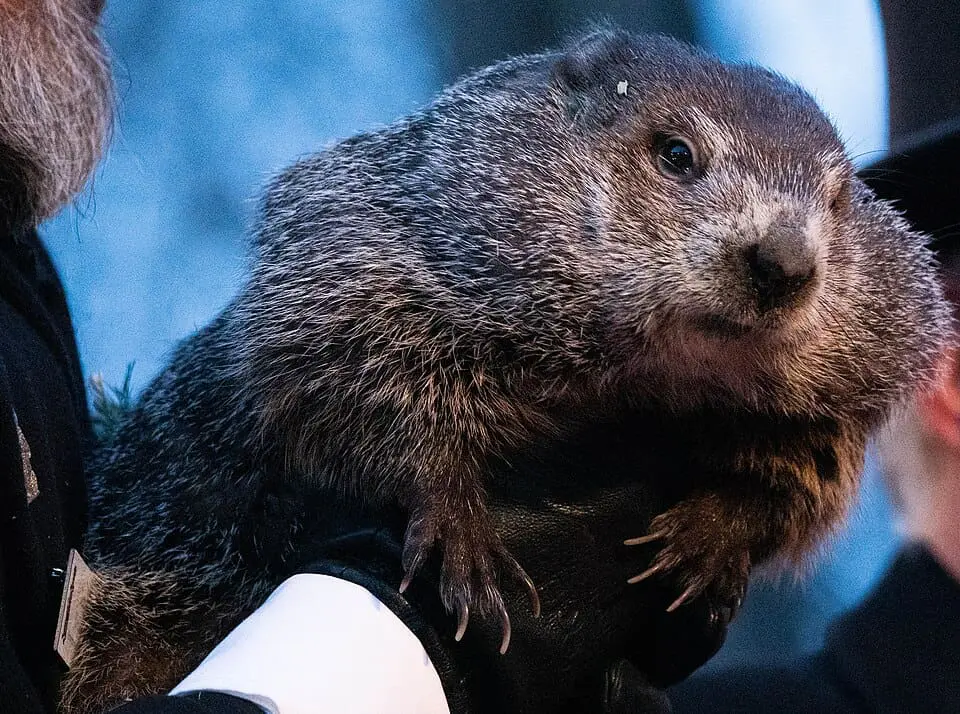
Image courtesy Wikimedia Commons/Creative Commons License/Image author: Anthony Quintano
Punxsutawney Phil, the iconic groundhog, emerged from his burrow this morning and saw his shadow, signaling six more weeks of winter.
Groundhog Day is an American tradition observed every February 2, rooted in centuries‑old European weather lore brought to the United States by German settlers. The custom is tied to Candlemas, a Christian feast day marking the midpoint between winter and spring. Folklore held that if the weather was sunny on Candlemas, winter would continue; if cloudy, spring was near. When German immigrants settled in Pennsylvania, they adapted the tradition using the native groundhog.
The first official Groundhog Day celebration took place on February 2, 1887, in Punxsutawney, Pennsylvania, where Punxsutawney Phil emerged from his burrow to predict more winter or an early spring. Today, the event draws thousands of visitors each year and has become a national cultural event, even inspiring the popular 1993 movie Groundhog Day.
Though Phil’s weather predictions aren’t scientifically reliable, the tradition remains a beloved part of American folklore. According to historical data from NOAA, Punxsutawney Phil has an accuracy rate of about 35%.