By Trish Svoboda/Images and video courtesy of the Rolling Hills Zoo
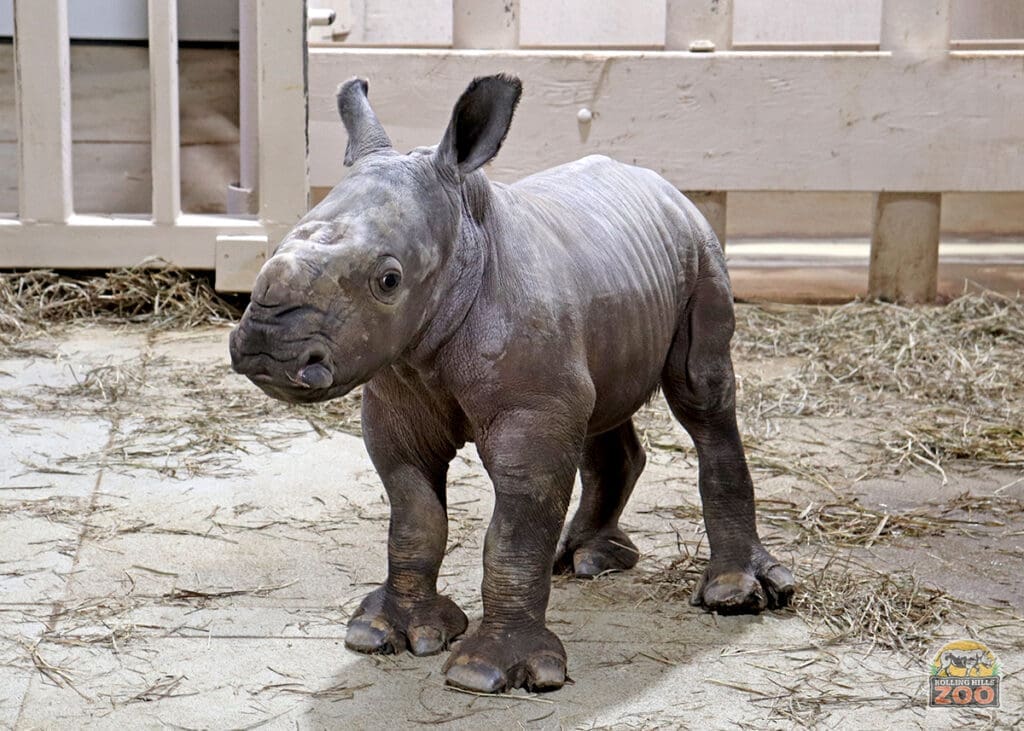
On February 8, the Rolling Rills Zoo welcomed a newborn male white rhino calf, born to parents Evie and Kengele. The calf is off to a good start, according to animal curator, Mark Echevarria. “He’s up and down nursing, running around, and he’s doing really well.”
While the calf has not yet been weighed, Echevarria said white rhinos typically weigh between 100 and 200 pounds at birth. He is expected to nurse for about a year and may stay with Evie for two to four years. Adult males can eventually reach 4,000 to 6,000 pounds. “He’s already developing and is comparable to a big puppy with how he acts with his mom,” he said. “While mom was trying to nap, he was trying to climb on her like she was a mountain. It’s fun to watch and it’ll be exciting when guests get to come out and see them. It’s such an opportunity for them to bond with the animals and fall in love with them and be more engaged in trying to figure out what they can do to help them.”
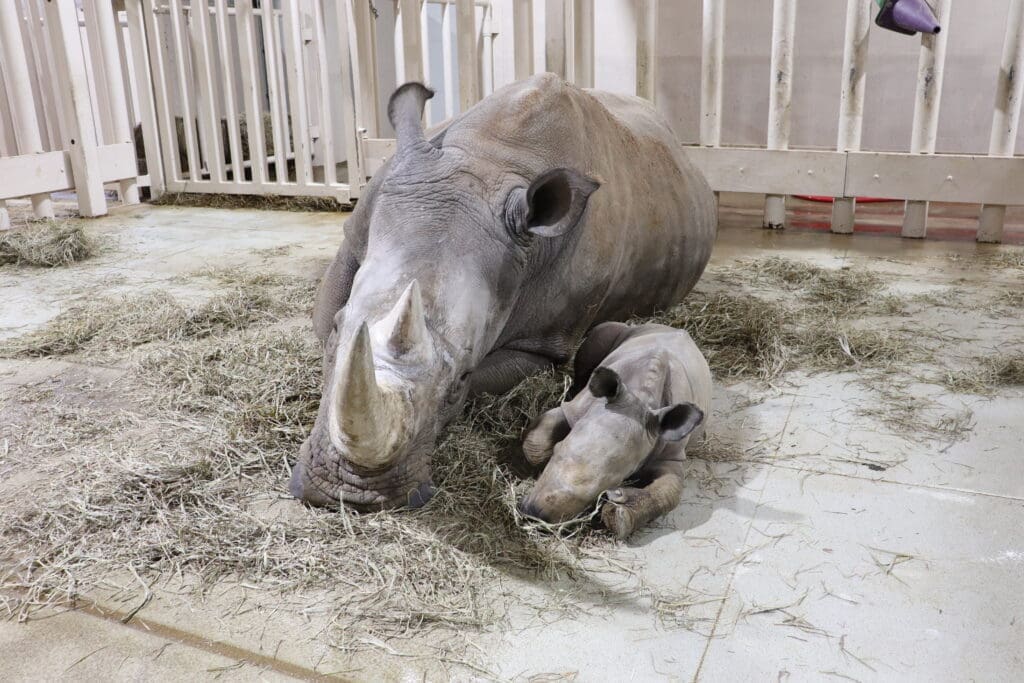
The pairing of Evie and Kengele was coordinated through the Species Survival Plan (SSP), a conservation program overseen by the Association of Zoos and Aquariums (AZA). Rolling Hills Zoo participates in the SSP program, which maintains a database of animals within each species, including white rhinos. The database tracks each animal’s genetic makeup and offspring.
“AZA accreditation is literally the gold standard for zoo accreditation,” said Linda Henderson, director of development and marketing. “AZA accredited zoos work together on making sure species remains viable not only within zoo populations but in nature as well. Should a species go extinct in a natural environment at least they will not be extinct in the zoo population. Hopefully, if we’ve kept that species viable with a good genetic pairing, we can continue to populate them within zoos and someday re-introduce them back into the wild.”
The focus is on how each match will impact overall genetic diversity within the species. “Genetic diversity is something that’s important so we can maintain a strong species within the zoos, and so we don’t end up with a lot of inbreeding which leads to problems with the animals,” said Echevarria.
Behind the scenes, staff modified stall barriers to ensure safety and are limiting access to the rhino barn to allow time for bonding. Reopening to the public will depend on Evie’s comfort level, with small, scheduled groups planned at first. “We’re just kind of gauging what we’re doing based on Evie and how she’s acting,” said Echevarria. “When she seems comfortable with us, we will start to open up the building and allow more staff in there and then open up for guests as well.”
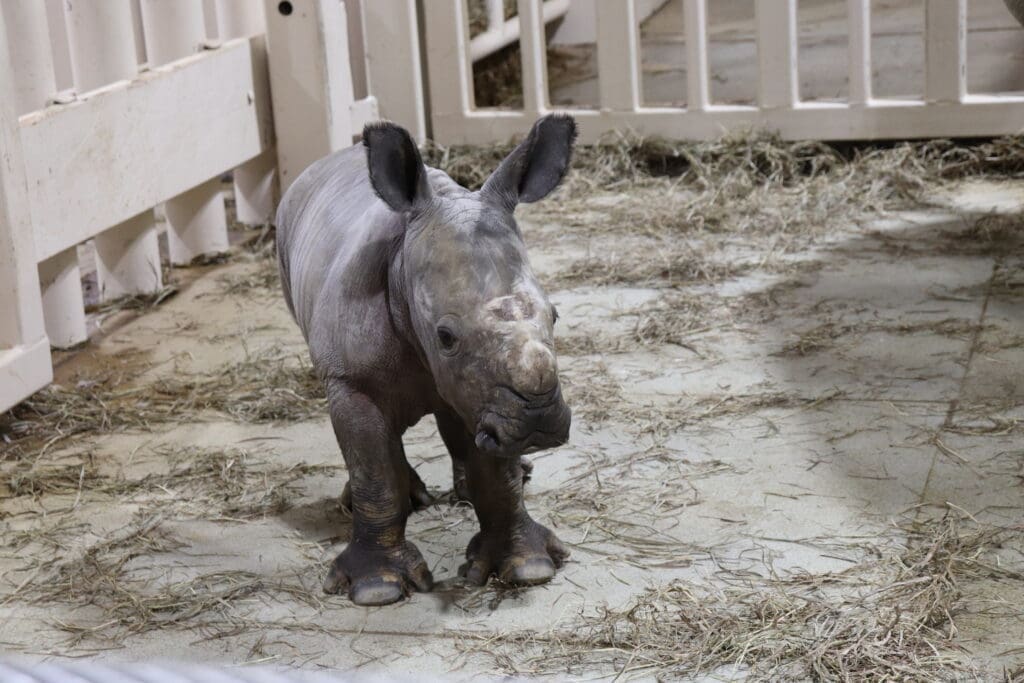
Zoo staff encourage the public to follow Rolling Hills Zoo’s social media for weekly updates, including pictures and videos, until the calf makes his public debut.