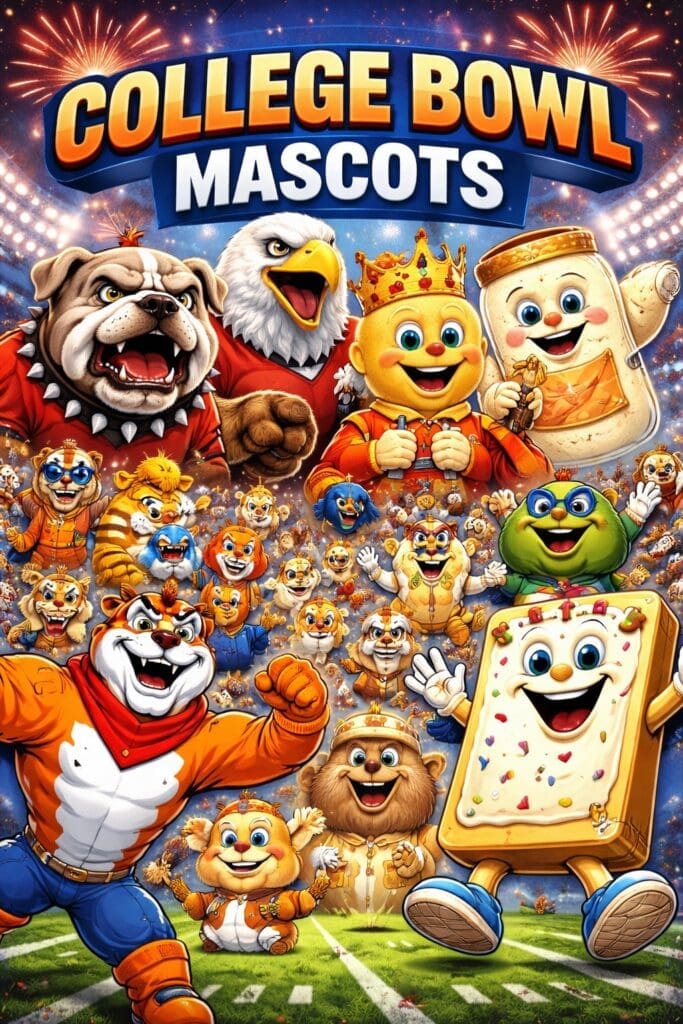
Mascots have long been part of the pageantry that makes college football bowl season more than just a series of postseason games. In recent years, they have become central characters, turning bowl games into pop culture moments that live well beyond the final whistle. From corporate icons to costumed characters and even edible figures, these mascots help define the identity of each bowl and add a layer of spectacle to the sport’s year-end celebration.
At the 68 Ventures Bowl, Bowl Dog has become a fan favorite regardless of the teams on the field. The cheerful canine has helped give the game its own personality, even as its name and sponsorship have evolved over time. The bowl’s history includes memorable performances, such as Marshall quarterback Byron Leftwich earning MVP honors in back-to-back seasons in the early 2000s, but Bowl Dog remains the constant presence.
The Arizona Bowl took a different approach by leaning into celebrity power. Entertainment icon Snoop Dogg’s involvement brought mainstream attention and a relaxed, festival-like atmosphere. While Nevada and Wyoming share the most wins in the bowl’s short history, Snoop Dogg’s presence has arguably become just as recognizable as the teams competing.
Military pride is front and center at the Armed Forces Bowl, where Freedom the Eagle symbolizes service and tradition. The bowl frequently features teams from military academies, reinforcing its connection to the armed forces and giving the mascot a deeper meaning beyond entertainment.
Food-themed mascots have carved out a unique niche in bowl culture. The Citrus Bowl’s Ched-Z and Prince Cheddward, inspired by Cheez-It crackers, combine humor with brand recognition, while also representing one of the nation’s oldest bowl games. Similarly, the Cure Bowl’s Cure Bear balances a lighthearted image with a serious mission, as the bowl has raised millions of dollars for cancer research.
Few mascots generate as much conversation as Tubby at the Duke’s Mayo Bowl. The postgame tradition of dumping gallons of mayonnaise on the winning coach has become one of bowl season’s most anticipated moments. What began as a novelty has turned into a defining ritual, adding to the bowl’s growing popularity.
The Fiesta Bowl’s Spirit represents one of college football’s most prestigious postseason games. Dating back to 1971, the bowl has produced historic moments, including a record-setting offensive showcase in its inaugural edition. Spirit serves as a reminder that even major bowls rely on strong branding to maintain their identity.
Other mascots highlight how bowls evolve over time. Zaxby’s Chicken once represented the Heart of Dallas Bowl before it transitioned into the First Responder Bowl, showing how mascots can mark different eras in a game’s history. In Los Angeles, former NFL star Rob Gronkowski’s larger-than-life persona, complete with a championship belt, has defined the LA Bowl, which is set to conclude its run in 2026.
The Las Vegas Bowl embraces the city’s flair with Elvis impersonators and showgirls, blending football with entertainment. Meanwhile, Obie the Orange has been a constant at the Orange Bowl, connecting modern games to traditions dating back to the 1930s.
Some mascots exist mostly in memory. The Outback Bowl’s Bloomin’ Onion costume was a fan favorite before the game’s rebrand, while the Chick-fil-A Cows at the Peach Bowl helped make the event one of the sport’s most recognizable. The Pop-Tarts Bowl took things a step further by turning its mascot into an edible spectacle, capturing national attention.
From Spuddy Buddy at the Potato Bowl to Tony the Tiger and Amigo Man at the Sun Bowl, these mascots demonstrate how bowl games have become as much about experience as competition. In an era driven by social media and shared moments, mascots continue to play a vital role in keeping bowl season memorable.