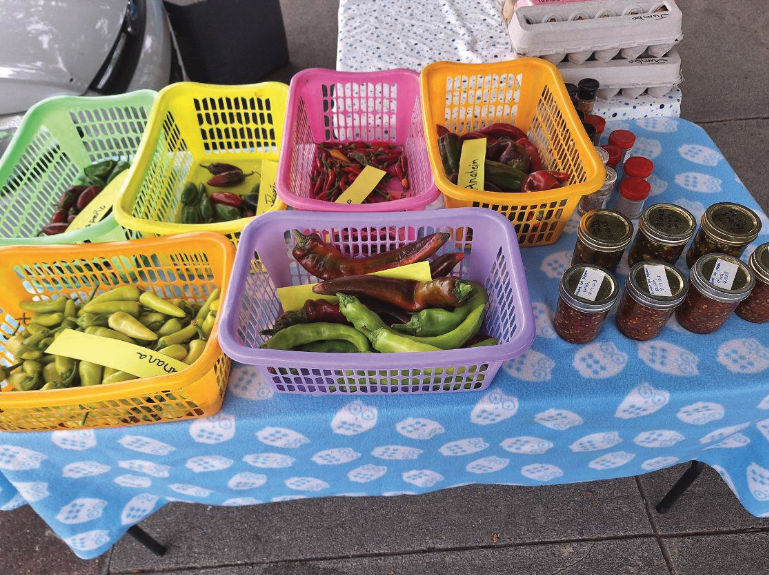
The Pepper Lady is a regular at the Clay Center Farmers’ Markets, selling fresh and powdered versions of some of the hottest peppers known to man. Linda Riggle’s homegrown blends are known for giving a kick … and then some. She grows and dries versions like jalapeños, cayennes, and poblanos – but for Riggle, that’s just the beginning of the heat scale. She also fortifies peppers that are almost 900-times hotter, like scorpions, ghost peppers, and the hottest registered pepper in existence: the Carolina Reaper.
“They call me ‘The Pepper Lady,’” Riggle laughed. “One day a little girl kept looking at my table and said, “You make stuff to make grown men cry;” turned out her Dad was one of my regulars.”
Riggle has been growing peppers for decades, adding more and more heat throughout the years. Though she has always gardened, she said it began with her husband of 30 years, James, who prefers spicy food.
“We started with jalapeños and cayennes in 1985 then and over the years we keep getting hotter and hotter,” she said. “He eats a lot hotter than I do but we cook with hot peppers in about everything.”
Together they own two plots of land, including 20 acres north of Clay Center that houses her gardens – all fertilized the natural way with on-site cow manure. It’s a method she learned from her Mom and remembers doing as a child, when it was her job to gather dried patties.
Riggle’s larger garden holds most of her produce, including mild peppers like tomatoes, bell peppers, cayenne, Anaheim, poblano, tabasco, Big Jim, chilis, eggplant, green beans, onions, and kidney and lima beans. She dries and cans, stocking the basement with her homegrown produce. Then there’s cucumbers, which are eaten fresh, pickled, sweetened, and anything else she can think of after this year’s bumper crop.
Between driving her bus routes for USD 379, she’s in the gardens or prepping her produce. Jim preps the land each year with a five-foot tiller on his Massey Ferguson tractor, while soaker hoses and automatic timers help cut their workload, she said.
The hot pepper garden sits about 100 feet away, she said, to avoid cross-pollination. Considered the “small” garden, she described it as 30×60 feet, holding five rows each of habaneros, ghost, Carolina Reapers, and the Apocalypse Scorpion. Riggle sells at the farmer’s market, while prepping in winter months for the following season.
These take at least a month longer to mature than non-hot peppers, she said – between 110 and 120 days total. While she does sell the ultra-spicy produce while fresh, she also dries and powders them for a kick that’s homegrown.
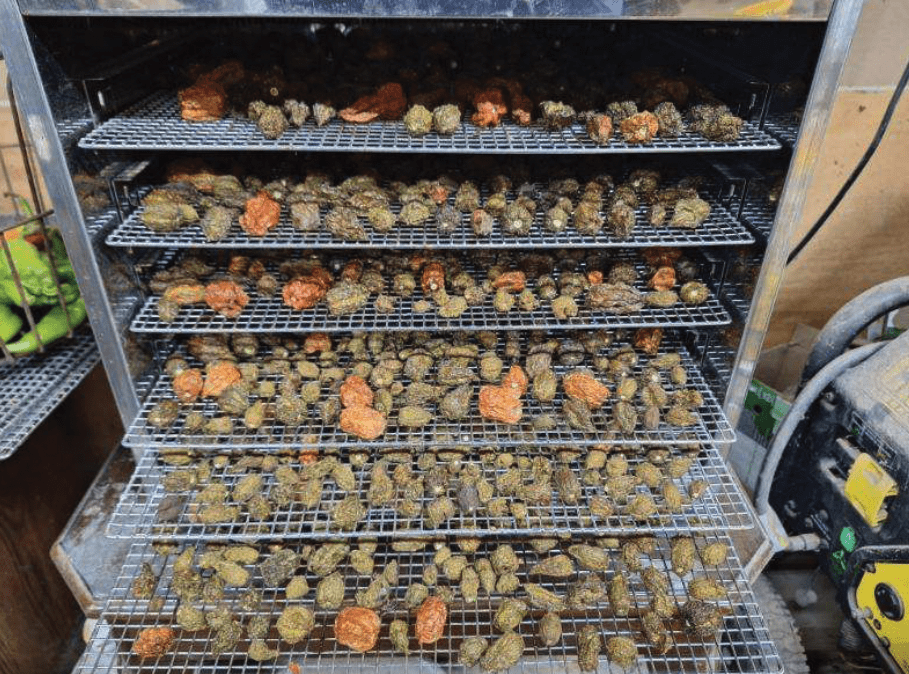
Before the first freeze, Riggle spent almost 10 hours picking and boxing up peppers to take home. From there she de-stems and dehydrates in her garage.
“My neighbors don’t like me when it’s running because that hot pepper scent will go clear to the alley in the back and the sidewalk in the front,” she said, adding that she has to keep air flowing through the building.
“During this season it pretty much runs nonstop.”
Years ago they learned the hard way it couldn’t be done in the house. Even still, she uses three masks, and washes under her eyes with Dawn to remove the oils that seep into her skin. Years ago she wore gloves but has since built up a tolerance to where her hands aren’t bothered.
“It’s like getting pepper-sprayed,” she said. “I told my husband I wasn’t in a big hurry this year and he brought home a respirator mask and was out there coughing and hacking and I said, ‘Yeah it’s not so easy.’”
She’s also utilized her son’s shed, who told her she has to place a warning on the door so he knows to hold his breath when going in.
“That heat smell, after you’re there for a while, you get kind of nose blind to it,” she said. “But when you first go in it’ll about knock you over.”

Riggle said she’s grown a tolerance to touching the peppers when picking, and even her pets have gotten used to the environment. However, she still recalls her adult children helping as kids, reminding them to wash their hands before using the restroom and to not touch their face.
After the peppers are dried, she grinds them, first in a blender, then a coffee grinder to get a fine dust. It’s then placed in seasoning jars and sold in two sizes.
“The milder ones that aren’t as painful to process, I sell for cheaper,” she said. “The ones that take it out of you, I have to charge a little more.”
Her best seller is a combination of ghost, habanero, and reaper mixed.
“That’s what I usually end up cooking with,” she said. James keeps a shaker in his lunch box, adding spice to his food on the job.
“The nice thing about the powder, everybody likes different levels of heat; if it’s not enough, put a couple sprinkles on your own without screwing it up for the rest of the family.”
Riggle sells all of her produce, including eggs, but when it comes to the hot peppers, she said 9 out of 10 times the customers are men, including a few who purchase her spice blends every few weeks.
“Everybody’s got a different heat tolerance, they tell me what they’re cooking and want to know about different spices,” she said. “I like working with the peppers, it gets real fun.”
Top: Linda Riggle’s dehydrator filled with hot peppers that will be ground into a powdered spice. Left: Her table at the farmer’s market featuring fresh produce, salsa, eggs, and spices. Below: a heat chart of her hottest blends.
Where Peppers Find Their Heat
Hotter, more flavorful peppers are cultivated by farmers all over the world. Often, that means creating new peppers by crossing two already-spicy plants. For instance, the Carolina Reaper was made by crossing habaneros and the Naga pepper and released in 2013; it beat out the ghost pepper that same year as the hottest pepper. Others are peppers that have been around for thousands of years and either bred for more spice or recently tested with official methods, like ghost peppers and habaneros.
Inventor of the Carolina Reaper, Ed “Smokin’ Ed” Currie of the PuckerButt Pepper Co., spends 8-10 years creating each new pepper. He founded the company after getting sober in 1999 and now runs the largest organic pepper company in the country.
In 2023, Currie introduced Pepper X, which beat out his Reaper for the world’s hottest pepper. In summer of 2025, he said he has two more peppers that will be released, one in three years and another in five-seven.
PuckerButt also focuses on taste, meaning they often abandon new pepper blends.
Currie uses a paintbrush to hand-pollinate each plant at his South Carolina farm.
He also credits spicy peppers as the source of his own sobriety and has partnered with healthcare providers to find opiate detox options.
*Data from a 2025 Business Insider interview