One Clay County family is getting back to their roots – literally. After inheriting farmland in the Green area, LaVerene Garner made a dramatic life change. She, her husband, Brandon, and their daughter, Ellery, moved from North Carolina to pursue regenerative farming.
On what she’s dubbed The Old Wasmer Place – after her great-great grandparents – the Garners have begun the process of restoring the acreage to its natural grassland state. LaVerene – that’s Lah-ver-eene – is the fifth generation on the land, with Ellery being the sixth.
“Our roots run as deep as the tall grass prairie in Clay County.”
Despite a lack of farming experience and living states away, the Garners decided to pivot their lives to create a sustainable homestead.
“We really question our sanity about it most days, but it seems like the right thing to do,” she said. “My grandma lived here almost her whole life and told me stories about my ancestors; I didn’t ever want to see it sold to someone else – that’s probably the simplest version of what made us come back here.”
In the last two years they’ve planted native grasses, wildflowers, native trees like black walnuts, pecans, pawpaws, and elderberries.
“Initially, we hired a consultant then an architectural company to help design the land,” said Brandon. “We’ve gone to a lot of people who are experts to help us with our knowledge gaps, which are big.”
The Garners also work with The Kansas Grazing Land Coalition (KGLC), who help guide them with best practices regarding grassland management. The Kansas Forestry Service helped them procure trees and determine tree placement and spacing.
LaVerene talks about choking out weeds, stimulating healthy grasses, and taking out tree lines that were planted as wind breaks post-Dust Bowl. However, with each topic she’s still learning.
“I’m more of a conservationist than a farmer,” she said. “I really enjoy having all the animals here; there’s so much to learn.”
And with more grasses, comes more birds, including owls, which offer natural pest solutions.
“One of the hard things about how we do things is we try to work with nature, not against it,” she said. For instance, using manure as the only source of fertilizer, attracting birds of prey as rodent control, and creating growth that fuels itself with minimal inputs.
They said this idea comes from two schools of thought: one, it’s too expensive to get into traditional farming. Garner said it’s a path they never attempted because it’s so far out of reach.
“We know we don’t have the resources to traditionally farm; it’s just too expensive,” she said. “But this feels like the right thing to do. The health of the land is really important.”
And two, their goal is to preserve the elements.
“Regenerative farming is all about finding a balance between nature and people so that both are supporting each other. ,” she said. “The health of a land is reciprocal with the health of people.”
The pair provide hands-on labor as often as they are able – LaVerene is a part-time physical therapist, while Brandon is an Environmental Engineer who works remotely – and they have hired help, including a high school intern.
Each day they work to create a modern homestead that not only nurtures the land, but helps provide for the community. Currently they have chickens and a greenhouse full of fruits and vegetables, which sit in self-watering containers. There are all types of herbs and LaVerene is overwintering citrus trees for the first time. Cattle and horses are on another plot of land and will be expanded.
Eventually, the livestock aspect of Garners will be a main focus, they said. Including mini cows and selling produce to the community.
“I want to be able to have small boxes of produce and sell beef on a smaller scale,” she said. “A lot of people can’t afford to buy a whole beef, and this is still healthy food on a smaller scale.”
Working with architects and area farmers, LaVerene said one of the hardest parts has been coming up with plans for the future, which she notes is always subject to change.
“It’s a very different way of thinking – this farm was not in my five-year plan, or not even our 100-year plan; when we got married this was not on my radar. Never considered this was something we would do,” she said. “I think as soon as you make a plan God and the Universe laughs in the face of them. You can develop the best plan out there and then it’ll just slowly crumble. Sometimes it’s not slow.”
However, they’re taking each season in stride – creating grazing routes, scheduling controlled burns, and seeing how the land responds to each season. Like planting wildflowers and thinking it was a bust. Then six months later, LaVerene said the field boomed in a single day.
“I had a flat tire that day and I didn’t even care because all of these colors were blooming in the field and it was just so beautiful.”
Though the path is not an easy one – physically, mentally, or on the wallet, the Garners said it’s laborious and rewarding all at once.
“It’s healing for the land; it’s a real gift to be able to do this. I’m grateful every day and if I’m honest, a little regretful every day too.”
However, LaVerene said creating the homestead has helped her connect to her ancestors, especially her Grandma Mall, and roots for others to do the same.
“This community needs people, the land needs people and the people need land. It’s a deeply spiritual thing,” she said, adding that in modern times, there are more possibilities for people to work remotely while pursuing off-stream ag ventures.
“Maybe the way forward is far backwards – when I look at the history book, they built like we are building: a barn, a house, a stable. People existed on less land and traded with their neighbors. They all worked together to support each other. There are ways to creatively allow people to support the entire county in a positive way.”
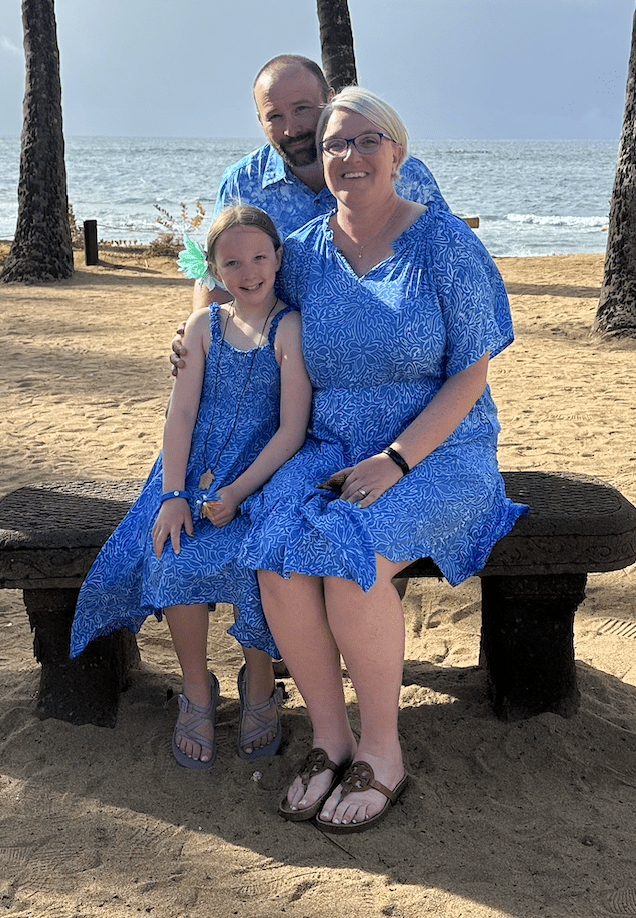
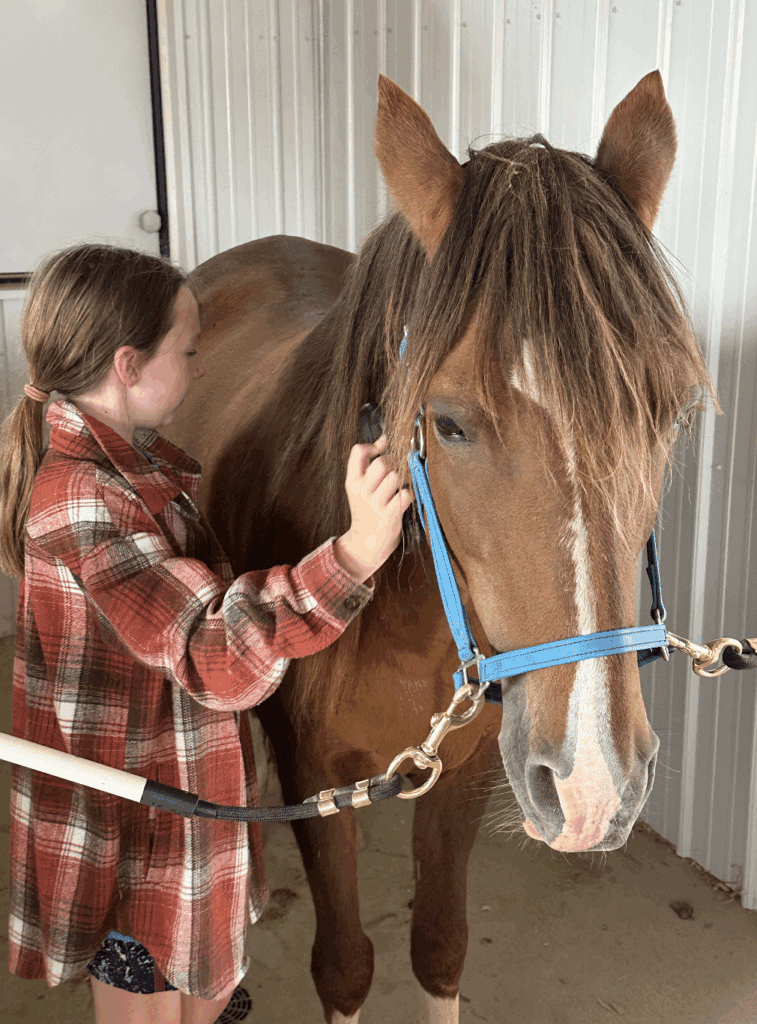
Pictures: Top: Ellery, Brandon, and LaVerene Garner who own and operate a regenerative farm on six-generation family land. It’s named The Old Wasmer Place. Followed by Ellery with one of the family horses.
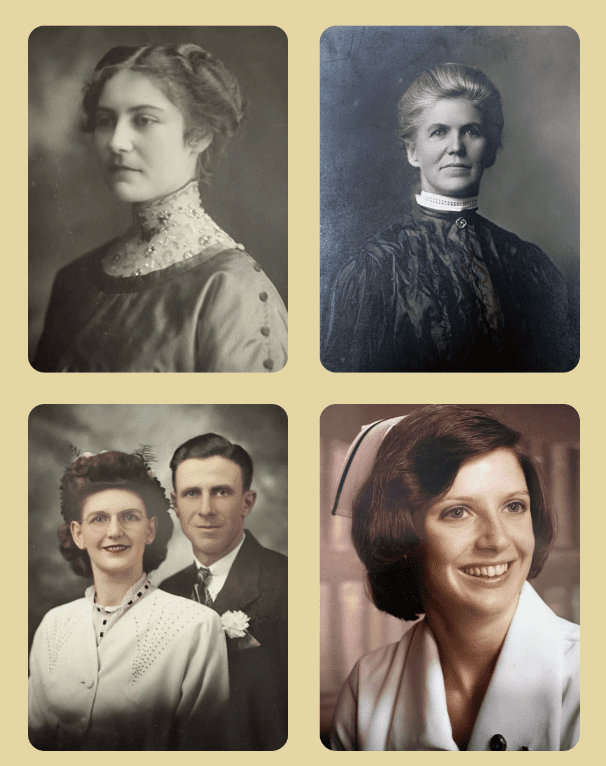
Left: Women of LaVerene’s family. Top left, her great-aunt Anna, the daughter of Lena Wasmer, for whom the homestead is named (top right). Bottom left: Jul & Fritz Mall, and their daughter/LaVerene’s mother, Nola (Mall) Pyle, bottom right. As Nola’s great-grandma, Lena was the only grandparent to offer financial help.
LaVerene believes this was due to Anna’s lifelong bachelorette status, which shed light on women’s need for financial independence.