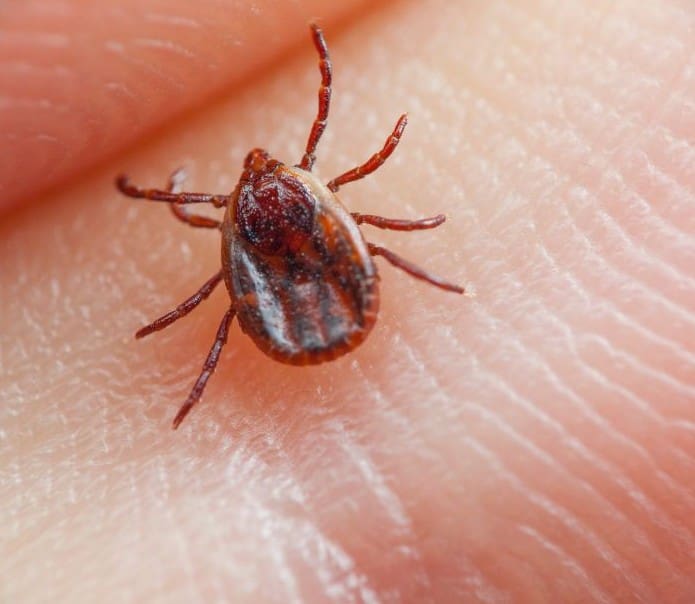
Image courtesy Canva
The Kansas Department of Health and Environment (KDHE) and the Kansas Department of Agriculture (KDA) have confirmed the first known case of the Asian long horned tick in Kansas. The tick was identified last week on a dog in Franklin County. This invasive species, first discovered in the U.S. in 2017, has now spread to 21 states, according to the U.S. Department of Agriculture.
Officials say the tick poses health risks to both humans and animals. It can reproduce without a male and cause heavy infestations that lead to severe anemia in animals. It is also known to transmit diseases such as bovine theileriosis in cattle and may carry other tick-borne viruses.
KDHE and KDA are working with veterinarians to monitor its spread and encourage prevention. The tick was found through KDHE’s tick surveillance program, which collects samples from veterinary clinics across the state.
To reduce risk, officials urge Kansans to use repellents, wear protective clothing, check for ticks after outdoor activities, and consult veterinarians about tick prevention for pets.