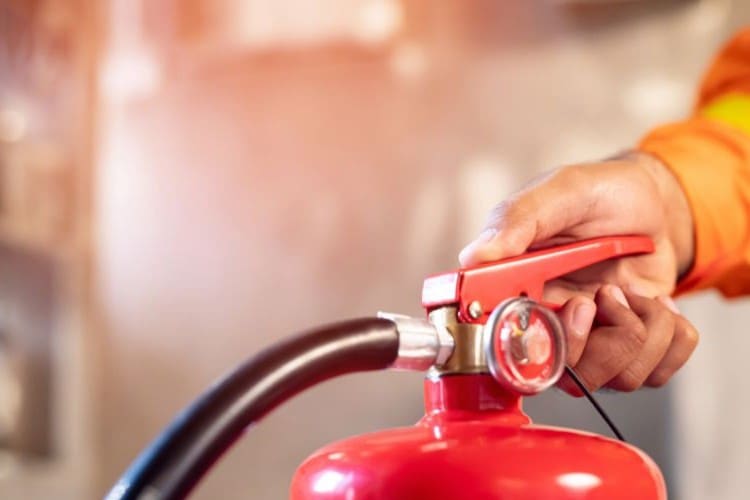
As the holiday season fills homes with decorations, busy kitchens, and more cold-weather equipment, the Kansas Forest Service is reminding residents and producers to check their fire extinguishers and make sure they know how and when to use them, not just have them on hand.
Aaron Williams, district fire management officer for southeast Kansas, explained that fire extinguishers are classified into five categories: A, B, C, D, and K classification. He said ABC fire extinguishers are what’s found in most homes.
“It’s better just to have an ABC fire extinguisher. You can buy them at your big box stores, and those are gonna be ABC fire extinguishers, and they’re usually what’s called a dry chemical fire extinguisher,” said Williams.
Fire extinguishers are classified by the type of fire they can handle. Class A is for ordinary combustibles like wood and paper, Class B for flammable liquids such as gasoline, Class C for electrical fires, Class D for flammable metals in industrial settings, and the newer classification, Class K.
“K is for kitchen. So it is specially designed for oils, cooking oils and cooking greases, things like that,” he said. “Generally, you’re not going to see those except in a commercial kitchen. Most people’s homes will have an ABC extinguisher if they have one. And that’s usually, that’s usually fine unless you’ve got an industrial deep fryer in your kitchen.”
Homeowners should inspect extinguishers monthly to ensure they are charged, unobstructed and in good condition. Williams said extinguishers should also be professionally inspected once a year, noting that some models slowly lose pressure over time.