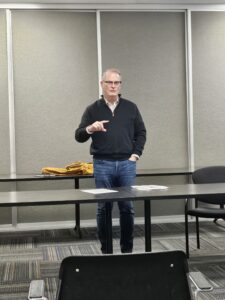
By Trish Svoboda/Image courtesy Kansas Rides
The Week Without Driving challenge is returning to Kansas, giving residents a chance to experience life without a personal vehicle and highlighting the importance of accessible transportation.
The challenge first began in Washington state in 2021, created by a disability advocacy group. In 2023, America Walks adopted it nationwide, and Kansas joined in for the first time. Today, the initiative includes all 50 states.
Michelle Coats, director of mobility management for North Central Kansas, said the main goal is awareness. “We want people who usually rely on driving to experience- even if it’s just for one day- what it’s like to get around without a personal vehicle,” said Coats. “And this really helps to spark conversations about how important it is to have reliable public transportation, but beyond that, safe sidewalks, walkable neighborhoods, and biking options for everyone so that people have choices of how they get around.”
She also said the hope is to shift the focus from cars to people, noting that not having a vehicle often isn’t a choice, but a barrier. “When our leaders and even our neighbors see how challenging it can be to get to work, school, or even the grocery store without driving, they start to understand why investment in transit and the bike infrastructure and walkable communities is so important.”
Participants can pledge their involvement at ksrides.org, choosing how many days they will go without driving. Feedback and sign-ups have grown since Kansas joined the program.
The effort, she said, isn’t about guilt. Instead, it’s about building stronger communities with multiple transportation options so everyone can get where they need to go.
“It’s really about learning and it’s more about understanding everyone’s transportation needs or choices,” Coats said. “Our communities become stronger when we do work together, and when we have multiple options, whether that’s driving in your personal car, using public transportation, walking to school, or having walkable communities. Just having those more well-rounded options makes communities stronger.”