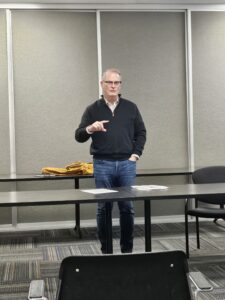
Kansas schools are funded in multiple ways – from federal, state, and local taxes. But despite schools being a public entity, the formula is different than any city or county budget. This comes down to one main difference, said Superintendent Brett Nelson. That difference is equalization.
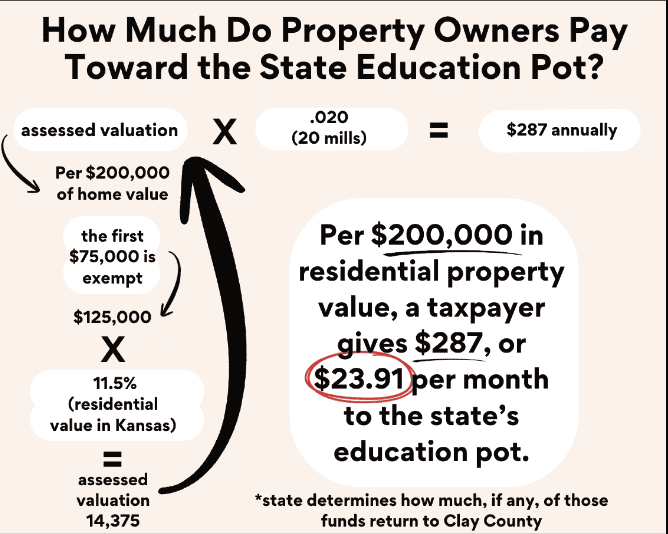
It’s a way for the state to “equalize” the funds each district gets so it can provide similar educational opportunities, despite the county’s tax income. Since 1992, the state has mandated 20 mills to state education. (A mill levy is the amount per $1,000 in property tax valuation.)
In 2024, it sat at 48.269 – 20 under state control and the remainder staying local – more than a percent less than 2023. The total number remains about seven fewer mills than the county’s budget and about 13 fewer than the city of Clay Center, which reduced by more than 7% in 2024.)
Those funds from the entire state go into one pot, then are divvied out per-student. Higher-earning counties that fall below the median line receive no funds, while the upper half gets funds based on their enrolled population. For a total of $3.47 billion annually for Kansas Schools, those mills pay just 24% at $856 million. (According to KSAB, Kansas Association of School Boards).
“Traditionally, Clay County has been a really strong state-aid district in the last several years, but that has been going down significantly.”
Nelson estimates that Clay County will completely lose state aid in the next three years. Those estimates come from higher sales and high-earning businesses whose tax exemption expires. In the state’s eyes, the county looks “richer,” therefore the state aid goes down. Paired with lowered enrollment, assessed valuation per-pupil goes up.
However, because it depends on what happens in other districts, it’s impossible to put a formula on the future.
School district budgets in Kansas can be complicated. But what makes it even more complex, Nelson said, most numbers are estimations. For example, taxes on ag land are calculated on an eight-year rolling average, the school’s capital outlay and bond and interest are calculated annually, while local option budget or LOB, is on a three-year average. State aid is based on many factors from each county and district across the state.
Meanwhile, enrollment in Clay County is going down, as birth rates do the same.
“Our biggest senior classes are leaving, and our smallest kindergarten classes are coming in,” Nelson said. “We can’t just go out and collect more taxes to offset that loss. On top of that, we are also losing state aid.”
So far, the budget was reduced naturally through attrition and retirements, accounting to the tune of a half-million dollars from fiscal year 2025 to FY 2026, which begins July 1. Seven full-time staffers left the district, and some grades went from four blocks to three, accounting for lowered enrollment. And every operating budget was reduced by 10%
“The unfortunate thing is we are projected to probably lose about that much for the next several years,” he said.” We’re going to have a few hard years. But we can do it and we will do it. We cut deep and hard last year and we’re prepared to do that the next several years. Our goal is to keep doing those budget reductions through attrition and retirement.”
Lowered enrollment could also mean fewer classes per grade.
As the assessed valuation of the county raises due to economic success, USD 379’s assessed valuation per-pupil goes up. Combined with lowered enrollment, and it’s two notches to receive fewer dollars, Nelson said. This year it was about $225,000 less in state aid.
That includes capital outlay, which has decreased by several hundred thousand the last two years, with the LOB also going down.
Revenue Rate Neutral (RNR); How it Affects the District
In Kansas, Revenue Neutral Rate (RNR) is a concept where an entity collects the same property tax as the previous year. Exceeding that number, even by $1, requires a public hearing for taxpayers.
“Have you ever had a year where expenses didn’t increase? Fuel? Food? Supplies? Wages? We have been able to stay revenue neutral but that’s not sustainable.”
Then, again come the estimates, which forms the entire budget.
“A large chunk of our budget is data we don’t know yet; assessed valuation is an estimate. If actual taxes come in different, that drastically affects the amount we can bring in or not bring in.”
In addition, factors like enrollment, free and reduced lunches, kids who ride buses, and more are all estimated numbers.
“We’re pretty good at using history to make those guesses,” he said. “But if we stay revenue neutral and numbers are off a smidge, it absolutely ties your hands to not do anything else.”
Annually, a cost-of-living increase is provided; this year it was 3% for 350 staff members.
“We’re the biggest employer in the county; if we didn’t provide that and told our employees there was no increase for five years – that can’t be the plan,” he said. “We wouldn’t keep staff employed here.”
Keeping the Public Informed
Overall, Nelson said he wants to communicate with the public and have them reach out with any questions.
“I don’t get a lot of questions; I don’t know if our board members do more than me, but that’s how I usually get feedback is from them.”
He added that all board meetings are live-streamed and available online. They are also open for the public to attend and ask questions.
“With questions, I wish people would just call me. Send an email or set up a time to meet; I’ll buy you a cup of coffee if you come on in,” he said.
“We’re dealing with declining enrollment and the loss of state aid, now we’re also talking about a bond and want to help people understand why that is.”