• An approved bond will not raise taxes
• Repair list comes from a comprehensive 2022 engineer review
• USD 379 capital outlay accounts for about $1.5 in maintenance, or $3.59 per square foot
• Repairs and maintenance have been deferred due to lack of funds
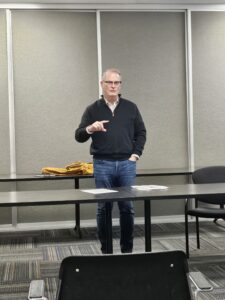
On the evening of November 3rd, a bond focus group meeting was held at Garfield School. The meeting was hosted by HTK Architects, the company hired by USD 379 to handle a potential bond issue. Clayton Kelley with Piper Sandler, a public finance company out of Kansas City, also presented.
The meeting began with a recap about two tax-neutral bond options.
Option A: 15-year, $10.25 million
Option A is a “maintenance only” option to repair roofs and exterior envelopes, repave parking lots, update playgrounds with ADA compliant equipment, a parking lot for the district gym, and replace the bleachers and gym floor at CCCHS.
Option B: 20-year, $11.8 million
Option B is a “consolidation” option. This would include a three-classroom addition to Lincoln to house grades K-5; Garfield would hold preschool and district offices; no changes to Wakefield or Clay Center middle or high schools. Maintenance would still be included, with roofing repairs paid out of capital outlay.
Upcoming:
The USD 379 school board will choose if they wish to pursue one of the bond options on or by December 8th. Their bond choice would be up for public vote in March of 2026.
Expiring Bond
The current USD 379 bond will expire in early 2026, four years before it was originally scheduled to mature, in 2030. By refinancing at a lower rate, the district saved taxpayers around $350,000 in interest, said Superintendent, Brett Nelson.
Clayton Kelley, Managing Director of Education for public lending sector, Piper Sandler, said the potential bond would still include 6.8 mills – avoiding costing taxpayers additional dollars.
“This is already a good example of what the district has done to be responsible with its funds,” Kelley said.
“We really pride ourselves on putting together a financial plan for the district that’s conservative and cautious.” Kelley said projections for a potential 2026 bond is planned without assuming continued assessed valuation growth.
“That’s not a projection, it just puts the district in a position where you’re in a really cautious financial plan.”
He added that the school district’s assessed valuation has grown more than 5% annually over the last 10-15 years, which has also contributed to the existing bond’s early payoff.
In addition, Kelley said school districts often refinance to lower their interest rates, a move that would create further savings.
“The great thing about your district is you’re in a position to take care of a lot of facility needs, keep the bond and interest fund mill levy flat and continue to keep the total district’s mill levy lower than the state average.”
Meanwhile, Maria Kutina, principal architect at HTK said bonds are what allow school districts to maintain their property through rising maintenance costs.
“This is actually quite a bit of work to get done for this amount of money,” Kutina said. “Things are just so expensive.”
Finally, attendees were asked to discuss positives and challenges of each option, which will be presented to the school board for review.