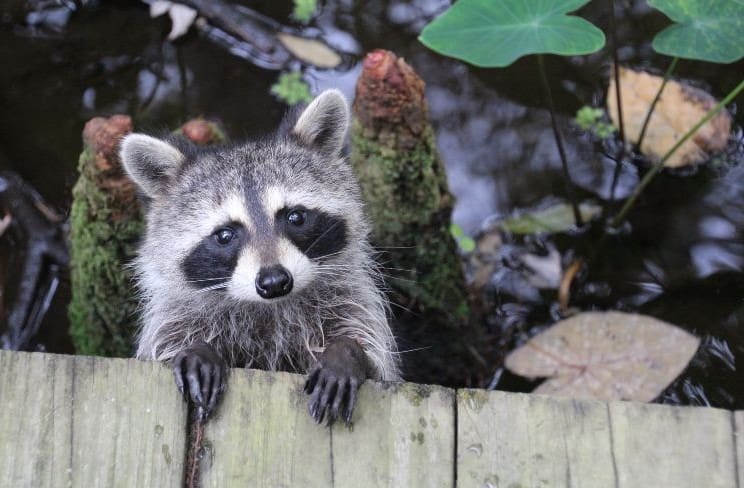
Image courtesy Canva
K-State wildlife specialist Drew Ricketts talks about research exploring how raccoons are adjusting to urban environments and living closer to people. He outlines the study’s focus on traits linked to domestication and how these traits can influence both animals and humans.
Ricketts highlights examples from the research, including a University of Arkansas at Little Rock study that examined raccoon populations in different areas for signs of domestication traits.
“So when we think about animals becoming domesticated from the wild species that they started out as, there are a number of traits that they can develop that basically are adaptations to allow them to be less fearful of humans, maybe, or to allow humans to be less fearful of them, that facilitate the process of those critters living in close proximity to humans,” he said. “You know, becoming white, like domesticated poultry that we see, that’s an example of this, or a smaller brain, maybe less sharp teeth or less long teeth, and the characteristic that they specifically looked at in this study was rostrum length, which would basically be the length of the snout.”
He describes the data and evidence researchers found when investigating signs of domestication syndrome in raccoons. After accounting for factors like plant hardiness zone, the study showed that raccoons in highly urban areas had snouts about 4% shorter than those in rural areas.
While a small difference, it was statistically significant, suggesting that urban raccoons may be developing physical adaptations that help them live more comfortably near humans.