By: Matt Weller, USD 379 Communications Coordinator
Photo Courtesy of Matt Weller
In last month’s article, we talked about the growing concern about the mental health data of our Clay County youth. One of the more shocking data points is that 28 percent of last year’s 6th, 8th, 10th, and 12th graders in Clay County said they had seriously thought about killing themselves.
This concerning data isn’t isolated to just Clay County or Kansas. This is a worldwide trend in the wrong direction. The question is no longer whether this crisis is real, but why it is happening. One possible theory may lie in our pockets: smartphones and social media.
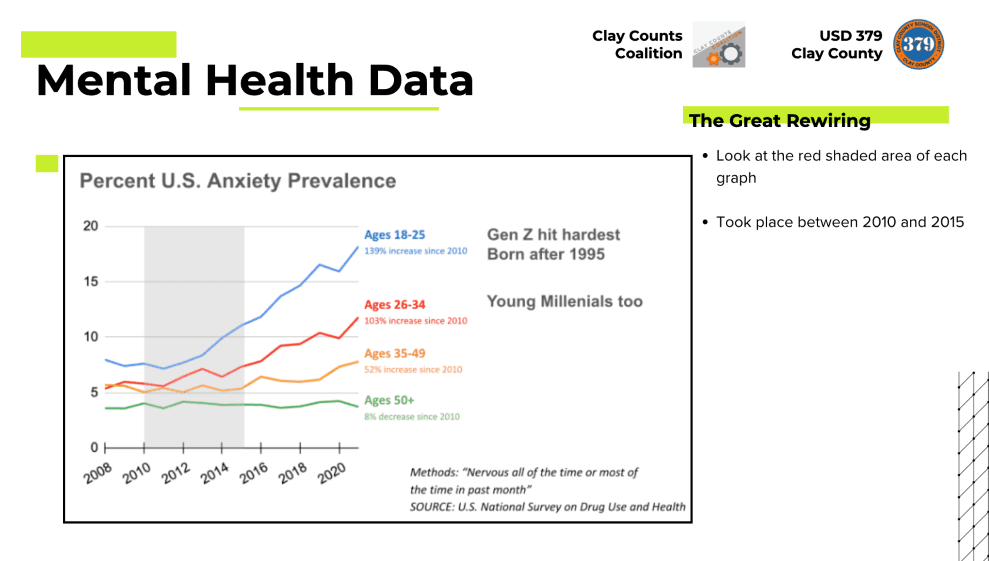
In his book “The Anxious Generation”, Jonathan Haidt argues that between 2010 and 2015, a “Great Rewiring” took place. During this time, anxiety among young adults ages 18-25 rose by 139 percent. (see graph below)
In his opinion, the timing is no coincidence. This period also marked the widespread adoption of smartphones and the explosive growth of social media platforms like Instagram and Snapchat.
For Millennials, who came of age in the early 2000s, phones were tools for limited connection. A flip phone might have allowed you to call home or send a quick text, but it didn’t have front-facing cameras, endless scrolling, or algorithm-driven feeds designed to capture attention.
Gen Z, born after 1995, entered puberty in a completely different world. They offered front-facing cameras for selfies, constant access to social media, unlimited data, and unlimited interruptions. Instead of being the customer, Gen Z teens became the product in an attention economy.
Instead of playing outside or developing independence, Haidt says that many young people now find themselves tethered to devices. Instead of face-to-face friendships, they navigated likes, comments, and online bullying. The result has been more loneliness, more anxiety, and in too many cases, despair.
What can we as a society do to help reverse this trend? In next month’s article, we will look into what Haidt says is needed to create healthier norms for our kids. Want to keep up with everything Clay Counts is doing? Visit our website at claycountscoalition.com and follow us on Facebook and Instagram.