By Payton Tholstrup
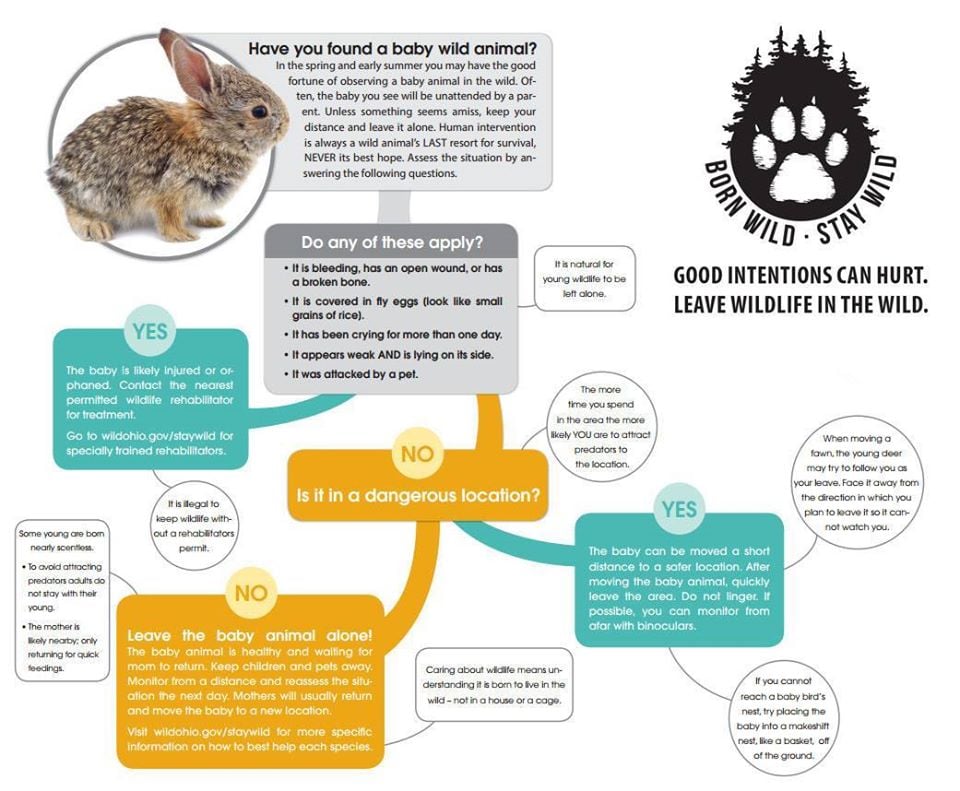
Spring is here and as people spot baby wildlife, they often wonder if they need help – but most do not according to Milford Nature Center Director Pat Silovsky.
People frequently want to help baby rabbits. Oftentimes, they want to remove them from the yard because of dogs and feral cats, but they can co-exist.
Other times, people want to help because they think the nest has been abandoned. But mother rabbits only come to the nest twice a day, around dawn and dusk. They stay for less than two minutes.
“Because of this, it is rare to catch a mother rabbit in the act of feeding. She does not want to linger and leave her scent since her babies are currently scentless and that is their protection,” said Silovsky.
Rabbits only stay in the nest for 3-4 weeks and then they are on their own. At this point, their ears are standing straight up and they are still small – the size of a tennis ball. While they can be easily chased down at this point, they don’t need help.
If you are worried about the nest for whatever reason, you can cover it during the day with an overturned laundry basket, cinder blocks, or even park the lawn mower over it.
“Everything will be fine during the day, but you must uncover the nest at night and let the mom come,” she said.
If you have a dog and the nest of rabbits is in the backyard, take the dog out in the front yard in the evening.
Silovsky emphasized that relocation is a death sentence for wildlife. Removing the nest and bringing it to an unfamiliar area will never end well.
“Just simply removing the nest is not helping the wildlife people claim to love. It’s just not an option,” she said. “Research shows that you can only move a rabbit nest one foot at a time, or else the mother won’t find it. So, if you want to move it seven feet, it will take seven days!”
Relocation is a death sentence for other species as well.
“If you try to trap a mother skunk and baby skunk, for example, they will die a slow death from starvation as mom doesn’t know the area. She doesn’t know where food, shelter, or water are and there are competitors in that area.”
The best option is to wait it out and then prevent re-entry when they are gone.
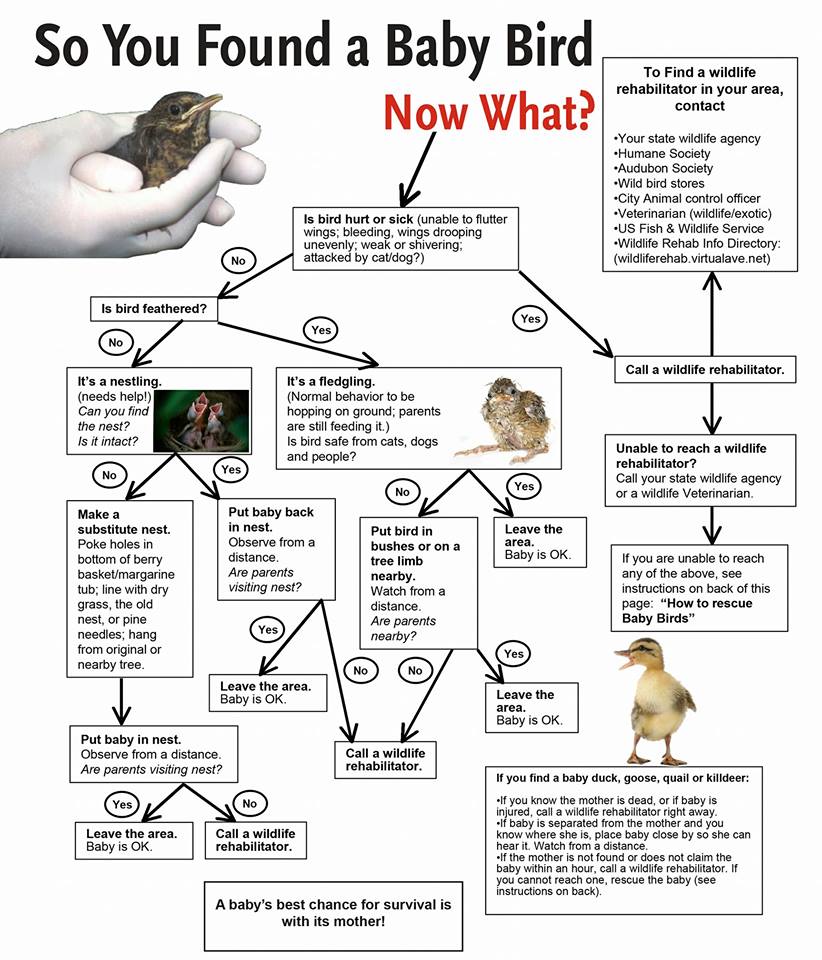
Another common concern for people is baby birds.
“The biggest misconception is you can’t touch the babies because the mother will smell you and abandon the birds. Birds have a lousy sense of smell, and no mother is going to abandon her
babies after all the energy she has put into egg laying and caring for the young. She will absolutely take care of those babies, so just put them back in the nest.”
If the nest is destroyed, Silovsky suggested creating a new nest that is about the same size. A couple of options include using a basket or a Tupperware container. It will need drainage holes in the bottom if it isn’t a porous material.
“Then just place it in the tree with a strap and screws and put as much of the nesting material in the new nest and put them back. Watch from the window for the mother to return but know that it can take several hours before you see her.”
Squirrels are also having babies right now, while trees are being trimmed for spring.
“Mom can be enticed to retrieve her babies if you place the babies in an open, shallow box. Place a heat source like a rock sock in the bottom covered by some polar fleece if the babies don’t have fur. Then, play a squirrel distress call from a phone recording to get her attention. She usually will come and retrieve them,” she explained.
It might take as few as five minutes, or it might take longer. If they haven’t been retrieved by sunlight, it won’t happen that day, but you can give them plain Pedialyte for hydration. Keep them warm and try again the next day.
“If that fails, then you need to find a rehabilitator. I have known tree trimmers who have saved the hollow part of the tree branch where babies were and placed that chunk of tree branch back in the tree or a nearby tree, using straps to hold it up and put the babies back. It works every time!”
While the Milford Nature Center no longer rehabilitates animals, Silovsky said you can always call and get more information on what to do when you find a wild animal that might need help.
“Do the calling before you take any steps to interfere.”